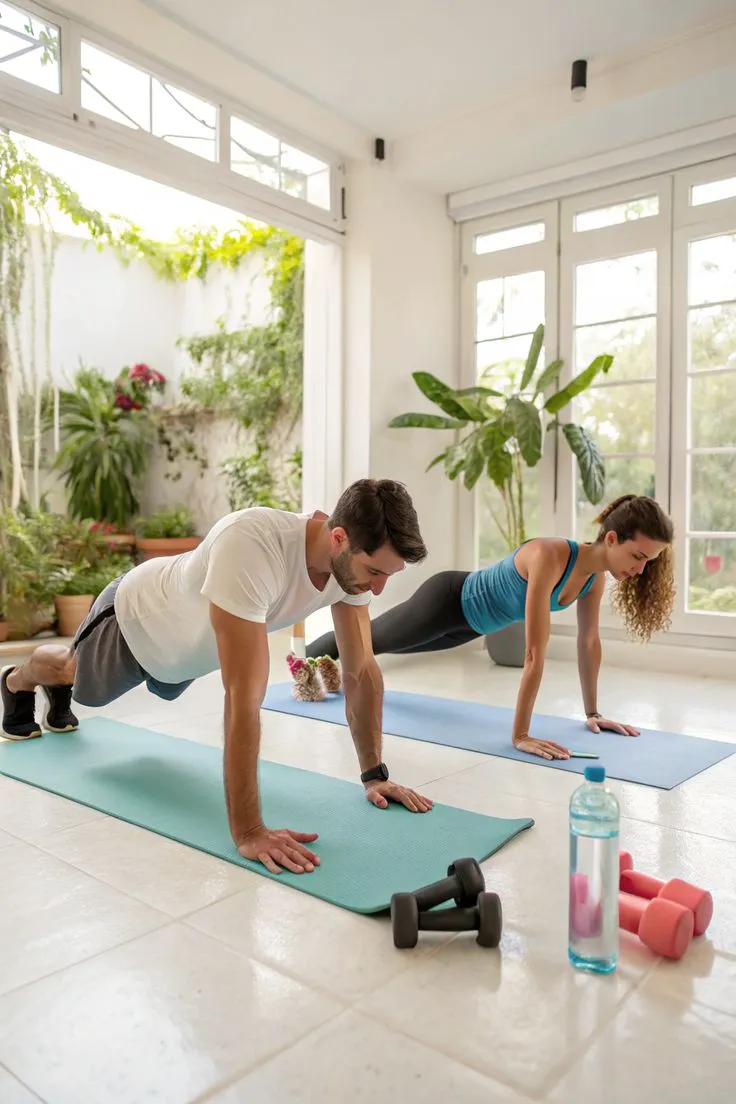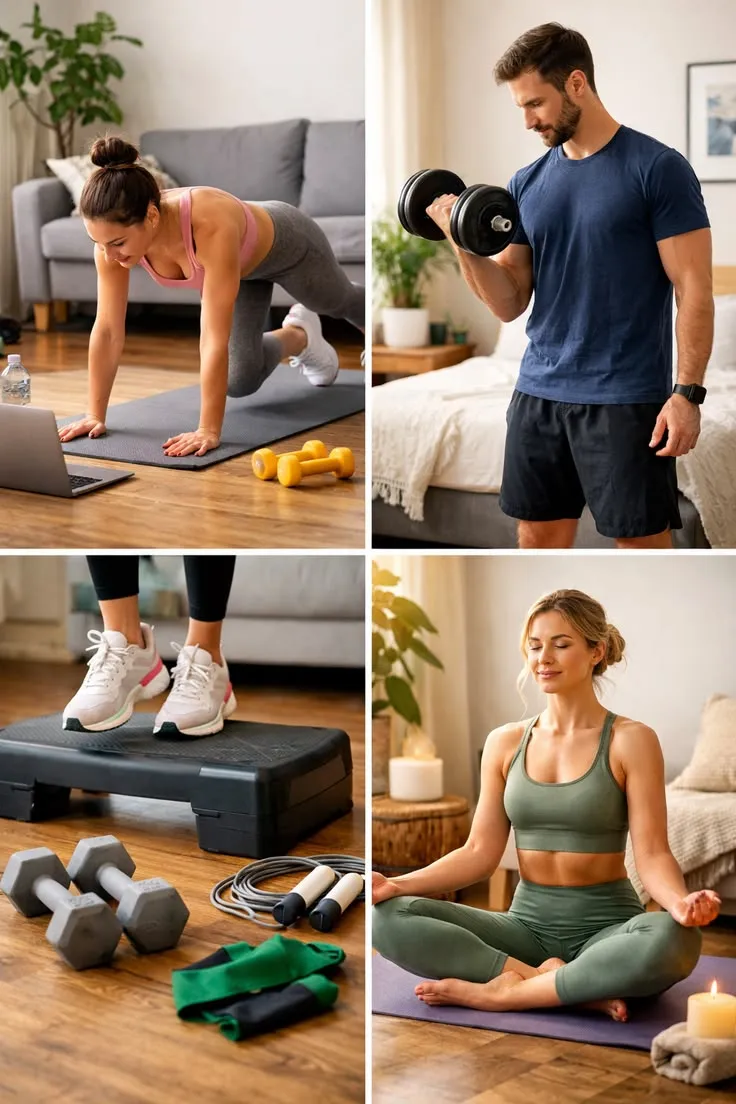
Floor Surface Calibration
Select your floor type and approximate room footprint to receive practical setup adjustments for joint impact and traction.
Calibration Notes
Select your floor surface and room size to receive calibration guidance.
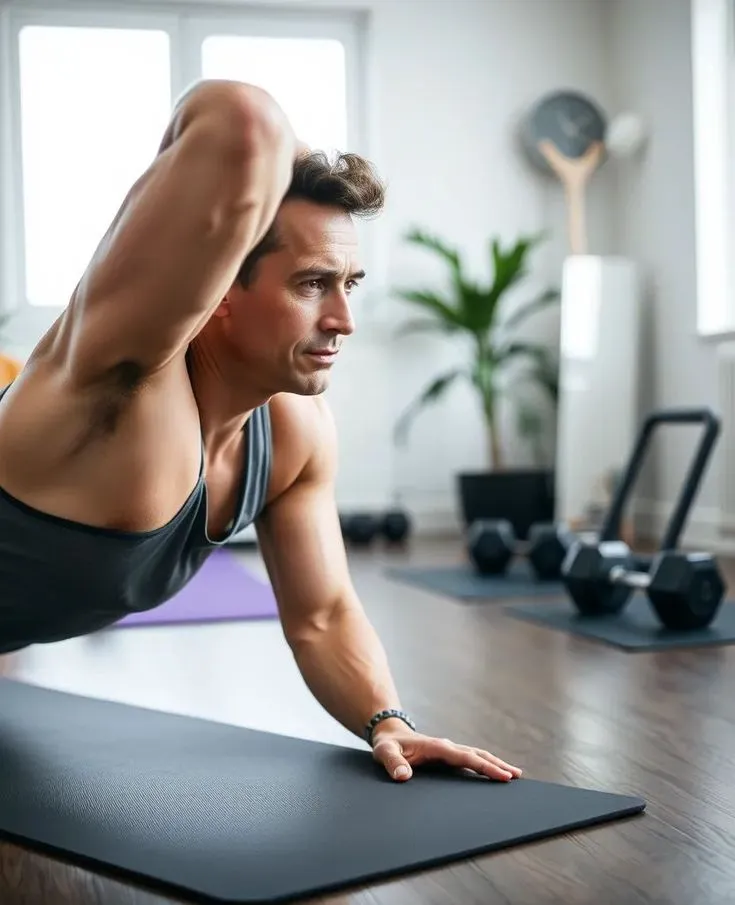
Room Size Reference
Under 6 m²: Suitable for isometric holds, seated mobility, and single-position standing drills. Clear a 1.5 m radius around your body.
6–12 m²: Allows lateral steps, crawling patterns, and short plyometric sequences. Remove furniture from one half of the room.
Over 12 m²: Full calisthenic flow and multi-directional movement. Define boundary markers at room edges for spatial orientation.
Three-Step Room Preparation
Clear
Remove obstacles within your movement radius. Check ceiling height for overhead arm positions.
Test
Perform a slow squat and lunge on your floor surface to assess traction and joint comfort.
Mark
Place visual markers at room boundaries so you maintain spatial awareness during flow sequences.
Vertical Space Matters
Overhead reach requires minimum 2.2 m ceiling clearance. Wall surfaces can serve as balance anchors for isometric work — ensure they are stable and free of fixtures at shoulder height.
For outdoor grass sessions, verify the ground is level and free of sharp objects within your movement zone.
Browse Classes by Space